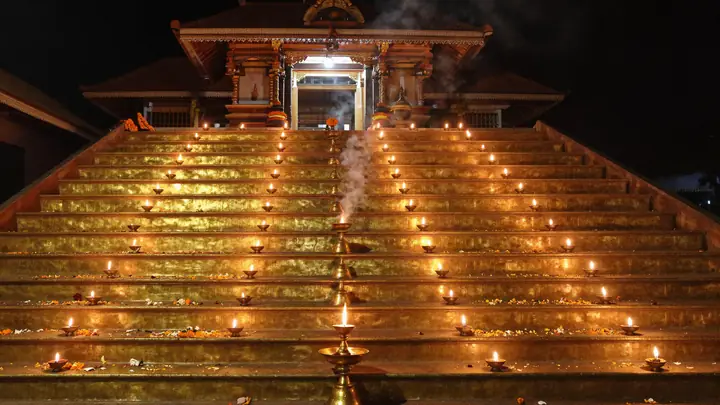
Sabarimala · Mandala season

Swamiye Saranam Ayyappa

స్వామియే శరణం అయ్యప్పசுவாமியே சரணம் ஐயப்பா

A companion for the Ayyappa Mala vow. It covers stories, every pooja, mantras in Telugu and Tamil, the 41-day path and the 18 sacred steps, with a tracker and japa counter for daily practice.

Read in
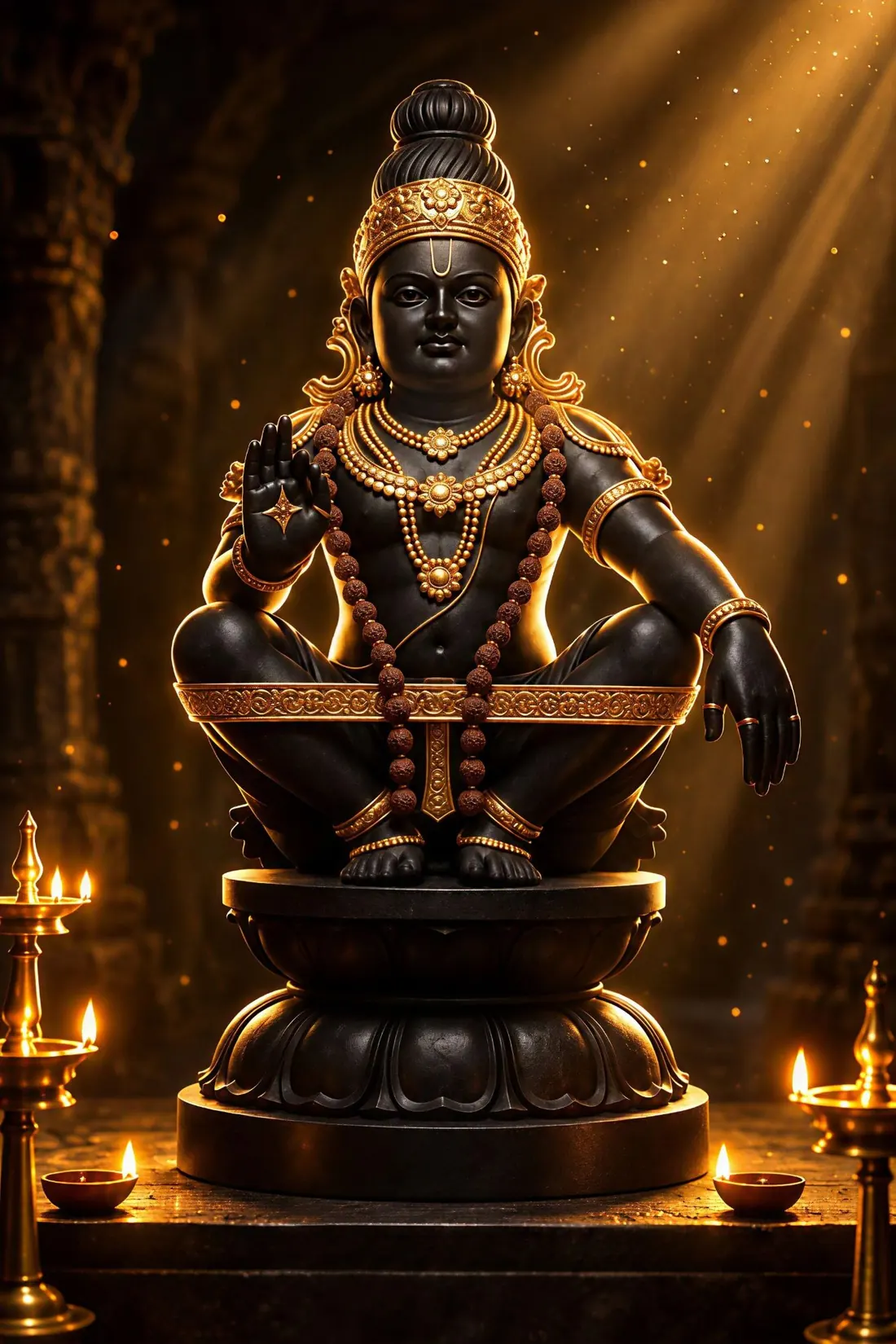
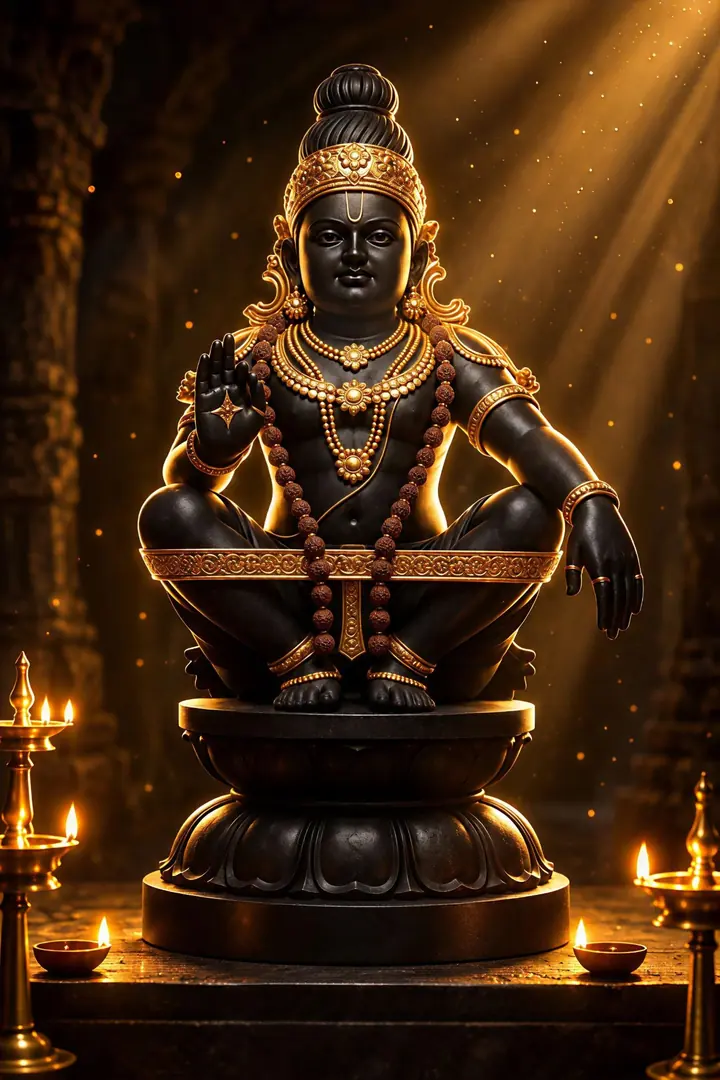
Lord Ayyappa seated in yoga posture on a lotus pedestal, lit by brass oil lamps
41days of Mandala vow
18sacred steps to the shrine
108beads in a full japa round
Day 1set it in the Tracker
Mantra for today

Ayyappa Gayatri

ఓం భూతనాథాయ విద్మహే భవపుత్రాయ ధీమహి తన్నో శాస్తా ప్రచోదయాత్

ஓம் பூதநாதாய வித்மஹே பவபுத்ராய தீமஹி தன்னோ சாஸ்தா ப்ரசோதயாத்

Om Bhootanathaya Vidmahe, Bhava-putraya Dheemahi, Tanno Shaastha Prachodayat

We meditate on the Lord of beings, the son of Bhava (Shiva); may Shasta inspire and guide our intellect.

See all mantras

Begin here

Explore the guide

Learn

The Story of Lord Ayyappa

Seven chapters from the legend, as devotees tell it.

The traditional story, as it is commonly told. Versions differ by region, temple and family.

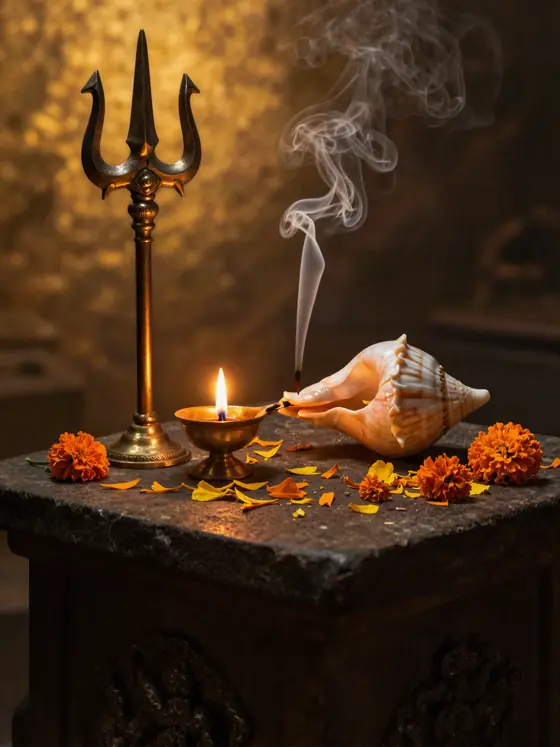
Shiva\'s trident and Vishnu\'s conch on an altar, lit by an oil lamp
Chapter I

Born of Hari and Hara

When the demoness Mahishi won a boon that only a child of Shiva and Vishnu could defeat her, the gods despaired. Vishnu took the form of Mohini, and from Shiva and Mohini, Ayyappa was born. He is Hariharaputra, the son of Hari and Hara.

In Ayyappa, the devotion of Shiva and Vishnu meet as one.
A glowing silk-wrapped child with a jewel on a rock by the Pamba river, beside a king's bow and royal umbrella
Chapter II

The child by the Pamba

Childless King Rajasekhara of Pandalam was hunting by the Pamba river when he heard a baby cry. He found a radiant child with a jewel around his neck, took him home as his own son and named him Manikanta, the one with the jewel at his throat.

Grace often arrives unannounced, like a child found by the river.
Young Lord Ayyappa holding his bow, riding a tigress out of the forest with a cub alongside
Chapter III

Tigress milk for the queen

Years later, the queen, wanting her own son to be heir, pretended to be gravely ill. The physicians said only tigress milk could cure her. Young Manikanta went alone into the forest and returned riding a tigress, and the whole court bowed before him.

He answered deceit with compassion, not anger.

The king loved Manikanta dearly and decided to crown him as the heir. The chief minister, who wanted power for himself, was jealous. He persuaded the queen that her own son should be king, and that Manikanta stood in his way.

The queen pretended to suffer an unbearable headache. Physicians, bribed by the minister, declared that only the milk of a tigress could cure her. They hoped no one would return alive from the forest. Manikanta, then twelve, offered to go. The king begged him not to, but the boy insisted. He set out carrying a bundle with two parts, one with offerings for Lord Shiva and one with food for the journey. Pilgrims remember this bundle as the Irumudi.

Some time later, the people of Pandalam saw an astonishing sight: Manikanta riding into the city on a tigress, with tiger cubs following. The queen and the minister fell at his feet and confessed. He forgave them both.

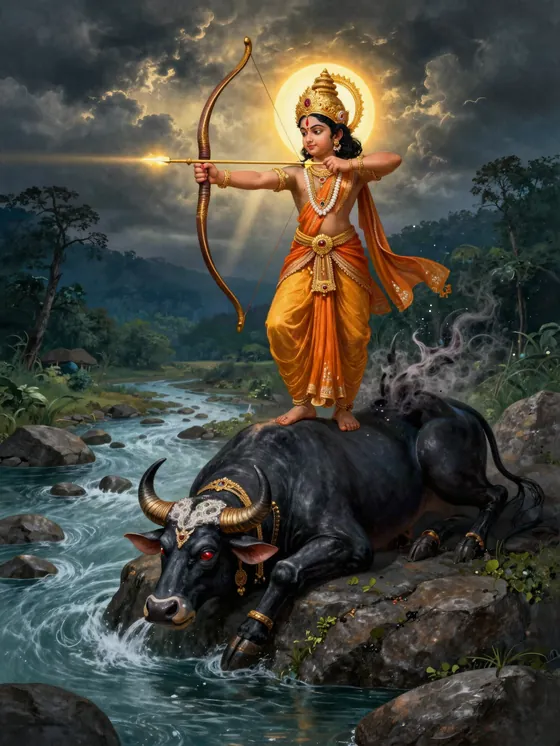
Young Lord Ayyappa standing victorious on the fallen buffalo-demoness Mahishi by the Azhutha river, his bow drawn
Chapter IV

The defeat of Mahishi

In the forest, Manikanta faced the buffalo-demoness Mahishi and overcame her on the banks of the Azhutha. Several traditions say that, freed from her curse, she became Malikappurathamma, who is worshipped beside him at Sabarimala.

Even the fiercest enemy can be redeemed.
Two crossed swords with a jasmine garland and a lamp, a sign of friendship
Chapter V

Vavar, the faithful friend

Vavar, remembered as a warrior, became Ayyappa’s closest companion. Pilgrims still honour him at Erumeli and on the path to the shrine.

Devotion welcomes everyone; friendship crosses every boundary.
A golden arrow on a forested hilltop, with the temple in the distance at sunrise
Chapter VI

The shrine on the hill

His mission complete, Ayyappa chose the forest hills of Sabarimala. As tradition tells, he shot an arrow and asked that his temple be built where it fell. There he sits in yoga posture, reached only by the 18 sacred steps.

The Lord waits for those who climb with a pure heart.
The Makaravilakku light glowing on a distant hilltop at dusk
Chapter VII

The light of Makaravilakku

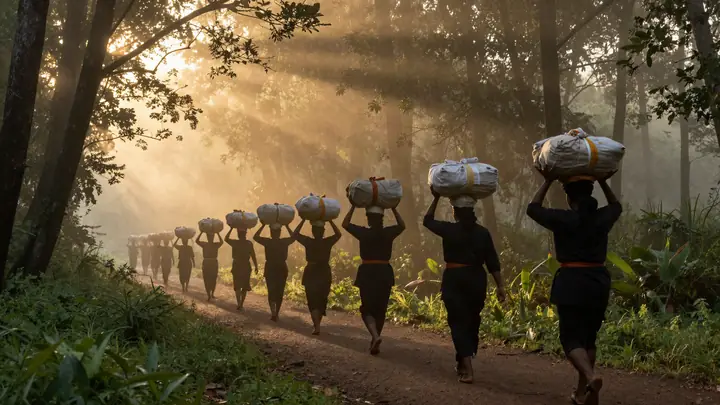
Every season, devotees keep the 41-day vow, carry the Irumudi on their heads and walk the forest chanting Swamiye Saranam Ayyappa. On Makara Sankranti, they see the Makaravilakku light on the hills as a sign of his blessing.

Every devotee becomes Swamy, for the Lord lives in each one.

Swamiye Saranam Ayyappa

1

Ganapathi Homam

Before Mala Dharanam (Day 1)

Removes obstacles before the vow begins.

  1. Bathe and wear clean clothes.
  2. Light the lamp and incense.
  3. Offer durva grass and flowers to Ganesha.
  4. Offer modak or sweets and a coconut.
  5. Perform aarti and receive prasad.

Chant: Om Gam Ganapataye Namah

2

Mala Dharanam

Day 1

The devotee receives the mala and begins the vow.

  1. Complete the Ganapathi pooja.
  2. Perform Ayyappa pooja with lamp, flowers and incense.
  3. The Guruswami places the mala on the devotee with a short prayer.
  4. The devotee bows and declares the intention to keep the vow.
  5. Receive prasad and begin daily discipline.

Chant: Swamiye Saranam Ayyappa

3

Daily Ayyappa Pooja

Morning and evening, Days 2 to 40

The heart of daily practice.

  1. Bathe before sunrise and wear the mala.
  2. Light the lamp and incense.
  3. Offer flowers and say the Ganapathi prayer.
  4. Chant Swamiye Saranam Ayyappa and the Ayyappa Gayatri.
  5. Offer naivedyam and perform aarti with camphor.
  6. Sit for a few minutes of japa or meditation.
  7. In the evening, close with Harivarasanam.
4

Neyyabhishekam

At the shrine, after darshan

Ghee carried in the coconut is poured over the deity. Devotees see the ghee as the soul merging with the Lord.

  1. Break the ghee-filled coconut (neythenga) from the Irumudi.
  2. Hand over the ghee for abhishekam at the counter or as directed.
  3. Receive the abhishekam ghee back as prasad.
5

Mandala Puja

Day 41

Marks the completion of the 41-day vow.

6

Irumudi Kettu

Day 41, the night before the pilgrimage

Packing and blessing the two-compartment bag in front of the Guruswami.

  1. Perform Ganapathi and Ayyappa pooja.
  2. Fill the coconut with ghee while chanting Saranam.
  3. Pack the front with offerings and the back with provisions.
  4. The Guruswami ties the Irumudi and places it on the devotee's head.

See the full packing list

7

Padi Puja

At the 18 sacred steps, Sabarimala

Prayers and reverence for the Pathinettu Padi before climbing to the shrine.

What the 18 steps stand for

8

Makaravilakku

Makara Sankranti (mid-January)

Devotees believe the divine light seen on this day is a sign of Ayyappa's presence.

9

Thanksgiving and Mala Removal

After returning from the pilgrimage

Give thanks at home, then remove the mala as your Guruswami instructs.

Customs vary by family. Confirm with your Guruswami.

Printable pooja card

One A4 page with the steps, mantras and offerings. Keep it at your home altar.

Who can do this pooja

  • Anyone: family members, elders, children and devotees abroad.
  • Women of every age can worship Ayyappa at home.
  • Devotees who can’t keep the full vow this year.
  • No mala, black dress or diet vow is needed. A clean body, clean space and a sincere mind are enough.

Simple daily pooja (about 10 minutes)

  1. Bathe or wash, and wear clean clothes.
  2. Clean the pooja space and place a picture of Ayyappa.
  3. Light a lamp with ghee or sesame oil, and light incense.
  4. Pray to Ganapathi first.
  5. Offer flowers and chant Swamiye Saranam Ayyappa, 108 times or as many as you can.
  6. Offer fruit, jaggery, milk or a simple naivedyam.
  7. Wave camphor aarti and bow to Swamy.
  8. Share the prasadam with your family.

What to offer

  • A ghee or sesame oil lamp.
  • Flowers such as jasmine, chethi (ixora) or tulasi.
  • Banana, coconut and jaggery.
  • Payasam or aravana on special days.
  • Sandalwood paste and vibhuti.

Mantras to chant

  • Swamiye Saranam Ayyappa, at any time.
  • The Ayyappa Gayatri during the morning pooja.
  • The 108 Saranam Ghosham on special days.
  • Harivarasanam at night, before sleep.

Open the mantras

Listen to the bhajans

On pooja days

  • Eat sattvic food that day, and avoid meat, eggs and alcohol before the pooja.
  • Speak gently and keep the mind calm.
  • These are good habits, not a vow. Do what you can with devotion.
  • If you want to keep the full vow later, see the 41-Day Path.

Swamy’s special days

Every week

Saturday

Widely kept as Ayyappa’s day. Devotees worship Swamy (Shasta) to ease the effects of Shani. Light a sesame oil lamp, wear black or blue, and visit a temple if you can.

Every week

Wednesday

Many families hold Wednesday dear and do a special pooja for Swamy on this day. Follow the custom of your family.

Every month

Uthram star

Ayyappa’s birth star. Panguni Uthram, in March or April, is celebrated as his birthday.

Every month

Temple opening

Sabarimala opens for the first five days of each Malayalam month, besides the main season.

Every year

Mandala season

From mid-November to mid-January, ending with Makaravilakku. This is when most devotees keep the 41-day vow.

Songs play from their official YouTube channels.

Showing Telugu bhajans. Switch language to see the others.

Dawn

Ayyappa Suprabhatham

అయ్యప్ప సుప్రభాతంஐயப்ப சுப்ரபாதம்

At dawn, before the morning pooja

Wakes the Lord with praise at the start of the day.

S. P. Balasubrahmanyam, Jayasindoor Ayyappa Bhakti

Opening

Loka Veeram Mahapoojyam

లోకవీరం మహాపూజ్యంலோகவீரம் மகாபூஜ்யம்

At the start of any pooja

A salutation to Swamy, hero of the worlds.

Veeramani Kannan, MC Audios Telugu

Japa

Dharma Shastha Gayatri

ధర్మ శాస్త గాయత్రిதர்ம சாஸ்தா காயத்ரி

Morning and evening japa, 108 times

Meditation on Shasta, chanted with the mala.

MC Audios Telugu

Bhajans

Maladharanam songs

మాలధారణంமாலை தாரணம்

When the mala is worn, and through the vow

A collection of beloved Ayyappa songs.

K. J. Yesudas, S. P. Balu, Aditya Bhakthi

Bhajans

Irumudi Kattu Sabarimalaikku

ఇరుముడి కట్టు శబరిమలైక్కుஇருமுடிக்கட்டு சபரிமலைக்கு

At the Kettunira, when the irumudi is filled

Sung as the sacred bundle is packed for the climb.

MC Audios Telugu

Bhajans

Pallikattu Sabarimalaikku

పళ్లికట్టు శబరిమలైక్కుபள்ளிக்கட்டு சபரிமலைக்கு

On the journey, carrying the irumudi

The pilgrims’ marching song to Sabarimala.

Parupalli Ranganath, Times Music Bhakthi

Closing

Harivarasanam

హరివరాసనంஹரிவராசனம்

At night, as the temple closes

A lullaby that sings Swamy to rest.

K. J. Yesudas, Aditya Bhakthi

Scripts and transliterations are a guide only. Confirm pronunciation with your Guruswami.

Swamiye Saranam Ayyappa

WhenGreeting, throughout the vow, and during the pilgrimage

స్వామియే శరణం అయ్యప్ప

Swamiye Saranam Ayyappa

Meaning: I surrender to the Lord, Ayyappa.

Hariharaputra Namah

WhenDaily pooja, japa with the mala

ఓం హరిహరపుత్రాయ నమః

Om Hariharaputraya Namah

Meaning: Salutations to the son of Hari (Vishnu) and Hara (Shiva).

Ayyappa Gayatri

WhenMorning and evening pooja

ఓం భూతనాథాయ విద్మహే భవపుత్రాయ ధీమహి తన్నో శాస్తా ప్రచోదయాత్

Om Bhootanathaya Vidmahe, Bhava-putraya Dheemahi, Tanno Shaastha Prachodayat

Meaning: We meditate on the Lord of beings, the son of Bhava (Shiva); may Shasta inspire and guide our intellect.

Sharanam Ayyappa

WhenDuring japa, at the 18 steps and the temple

శరణం అయ్యప్ప

Saranam Ayyappa

Meaning: Ayyappa, I take refuge in you.

Ganapathi Prayer

WhenStart of every pooja

వక్రతుండ మహాకాయ సూర్యకోటి సమప్రభ నిర్విఘ్నం కురు మే దేవ సర్వకార్యేషు సర్వదా

Vakratunda Mahakaya Suryakoti Samaprabha, Nirvighnam Kuru Me Deva Sarva Karyeshu Sarvada

Meaning: O Lord with the curved trunk and mighty body, radiant as a million suns, remove the obstacles from all my work, always.

Guru Prayer

WhenBefore Mala Dharanam and when seeking the Guruswami's blessing

గురుర్బ్రహ్మా గురుర్విష్ణుః గురుర్దేవో మహేశ్వరః గురుస్సాక్షాత్ పరబ్రహ్మ తస్మై శ్రీ గురవే నమః

Gurur Brahma Gurur Vishnu Gurur Devo Maheshwarah, Guru Sakshat Parabrahma Tasmai Shri Gurave Namah

Meaning: The Guru is Brahma, Vishnu and Shiva; the Guru is the Supreme itself. Salutations to that Guru.

Harivarasanam (first verse)

WhenEvening pooja and the close of bhajans. It is sung as the shrine closes each night.

హరివరాసనం విశ్వమోహనం హరిదధీశ్వరం ఆరాధ్యపాదుకం అరివిమర్దనం నిత్యనర్తనం హరిహరాత్మజం దేవమాశ్రయే

Harivarasanam Vishwamohanam, Haridadhishwaram Aaradhyapadukam, Arivimardhanam Nithyanarthanam, Hariharathmajam Devamashraye

Refrain: Saranam Ayyappa, Swamy Saranam Ayyappa

Meaning: I take refuge in the son of Hari and Hara, seated on the noble throne, who enchants the universe, whose sacred feet are worshipped, who destroys inner enemies and dances eternally.

Saranam Ghosham (108)

WhenGroup chanting, walking the forest path and climbing the steps. One devotee calls and the group answers.

CallResponse
1SwamiyeSaranam Ayyappa
2HariharasuthaneSaranam Ayyappa
3Kannimoola Ganapathi BhagavaneSaranam Ayyappa
4Sakthivadivelan SodharaneSaranam Ayyappa
5Malikappurathamma DeviyeSaranam Ayyappa
6Vavar SwamiyeSaranam Ayyappa
7Karuppanna SwamiyeSaranam Ayyappa
8Periya Kadutha SwamiyeSaranam Ayyappa
9Kochu Kadutha SwamiyeSaranam Ayyappa
10VanadevathamareSaranam Ayyappa
11Durga BhagavathimareSaranam Ayyappa
12Achankovil AraseSaranam Ayyappa

This is one commonly chanted version. Lines and their order vary between groups, so check it against your Guruswami’s list.

Day 1Begin

Mala Dharanam

  • Bathe early and wear black or dark blue.
  • Ganapathi pooja, then Ayyappa pooja at home or temple.
  • The Guruswami places the mala on you.
  • Begin the vow with Swamiye Saranam Ayyappa.
2 to 40Discipline

Daily discipline

  • Bathe before sunrise and wear the mala at all times.
  • Morning and evening pooja with chants.
  • Sattvic vegetarian diet. No meat, eggs, alcohol, smoking or tobacco.
  • Sleep on the floor and go barefoot.
  • Avoid anger, gossip and worldly indulgence.
  • Do not cut hair, beard or nails until the pilgrimage is complete.
Day 41Complete

Mandala Puja and Irumudi Kettu

  • Perform Mandala Puja.
  • Pack the Irumudi and hold the Irumudi Kettu ceremony with your Guruswami. See the packing list.
YatraPilgrimage

Journey to Sabarimala

  • Erumeli: Petta Thullal and prayers at the Vavar shrine.
  • The forest route to Pamba (traditional long path) or the shorter route from Pamba.
  • Bathe at Pamba, then climb Neelimala and Appachi Medu.
  • Sabari Peedam and Saramkuthi, then climb the 18 sacred steps for darshan.
AfterReturn

Completion

  • Thanksgiving pooja at home.
  • Remove the mala as your Guruswami instructs.

Eat

  • Rice, dal, vegetables and fruits
  • Milk, ghee and curd
  • Simple sattvic meals cooked at home
  • One full meal a day is common; follow your tradition

Avoid

  • Meat, fish and eggs
  • Alcohol, smoking and tobacco
  • Onion and garlic (per many traditions)
  • Stale food or too much spice

Conduct

  • Speak kindly and avoid anger
  • Avoid gossip and lying
  • Keep celibacy and self-discipline
  • Greet everyone as “Swamy”, and fellow devotees with Swamiye Saranam Ayyappa

Body and dress

  • Wear black or dark blue
  • Sleep on the floor
  • Go barefoot
  • Keep the mala on at all times
  • No haircuts, shaving or nail trimming

Items vary by Guruswami and region. Tick items as you pack; your ticks are saved on this device.

Front (Munmudi)

Offerings for the deity

0/10

Back (Pinmudi)

Provisions for the journey

0/7

Who may climb

Only devotees who have kept the 41-day vow and carry the Irumudi on their head.

What the steps mean

Five senses, eight passions, three qualities and two states of knowledge: eighteen things to rise above.

Padi Puja

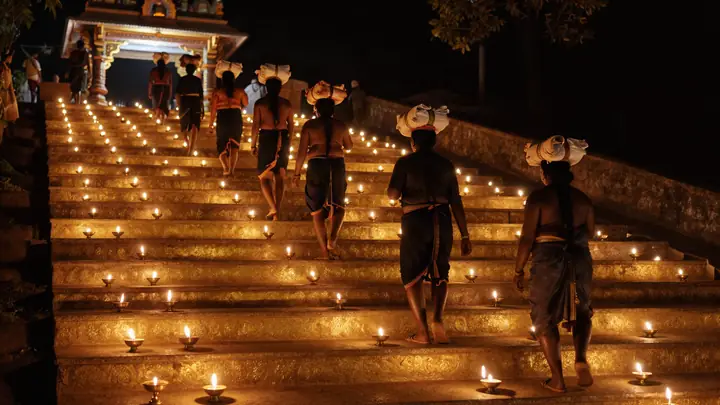
A special pooja in which every step is decorated with lamps and flowers. Temple priests perform it on booked dates.

What each step stands for

This is one widely told reading of the steps. Other traditions link them to the 18 hills around Sabarimala, or to other sets of virtues.

123456789101112131415161718
SensesPassionsGunasKnowledge
1
Senses

Sight

The five senses (Pancha Indriyas). The devotee masters what they see, hear, smell, taste and touch.

For your vow

Watch what uplifts you; turn your eyes from what disturbs the mind.

Step 1 of 18

How to climb

  1. Complete the vow. Climb only after the 41-day vow, with the Irumudi on your head.
  2. Break a coconut at the foot. Offer it on the stone beside the steps before you begin.
  3. Touch the first step and pray. Bow and ask for the Lord’s blessing.
  4. Climb steadily, chanting. Keep chanting Swamiye Saranam Ayyappa and keep moving; do not sit or stop on the steps.
  5. Follow the guards. Crowds are heavy, so follow the directions of the temple staff and police.
  6. Leave by the exit path. Devotees do not climb back down the 18 steps; follow the temple’s exit route after darshan.

Set your start date to begin counting days.

Today
—

Set your Day 1

Streak
0

days with every practice done

Today's focus

Wake a little earlier. Use the quiet before sunrise for pooja.

Today’s practice

0%

Japa today0 repetitions

41-day progress

All doneSome doneNoneUpcoming
0of 108
Rounds 0Today 0

స్వామియే శరణం అయ్యప్ప

சுவாமியே சரணம் ஐயப்பா

Swamiye Saranam Ayyappa

Round size

A full mala has 108 beads. Rounds of 27 or 54 suit shorter sittings. The phone vibrates at the end of a round where supported.

Finding support

  • Look for a local Ayyappa sangham, bhajan group or Hindu temple. Many cities with Indian communities have one.
  • Ask in local devotee groups or community forums for a Guruswami who can guide you.
  • Ask whether a Guruswami can guide you by video call. Customs differ on remote ceremonies, so confirm first.
  • Join live-streamed bhajans or pooja when you can’t attend in person.

Sourcing items

  • Mala: a 54- or 108-bead mala from an Indian grocer, temple shop or reputable online seller.
  • Irumudi bag: buy locally or order online. It must have two compartments.
  • Ghee and coconut: buy from Indian grocers. Check your country’s rules on carrying dairy and fresh produce before you travel.
  • Pooja items (camphor, incense, lamp, betel, flowers): most Indian grocers carry these.
  • Ask your Guruswami before using any substitute.

Daily life

  • Diet: cook sattvic vegetarian meals at home. Temple kitchens are good when eating out.
  • Work: tell your employer early about floor sleeping, going barefoot and grooming. Ask for a short break for pooja if needed.
  • Time zones: set a fixed pooja time and use reminders.
  • Cold weather: keep warm water and warm clothes ready for early baths.

Pilgrimage planning

  • Plan leave, flights and visas months ahead, especially for the December and January peak.
  • Check current booking and crowd rules with the Travancore Devaswom Board before you book.
  • Book your darshan slot and accommodation early.
  • Check airline rules for liquids and food before you fly with your Irumudi.

Preparation checklist

0/13

Common questions

I can't find an Ayyappa temple or Guruswami nearby. What should I do?

Look for a local sangham, a bhajan group or a Hindu temple with an Ayyappa shrine. Ask online devotee groups. A Guruswami may be able to guide you remotely for some parts of the vow.

Can I substitute ghee or coconut?

Ask your Guruswami first. Practices vary. Pure ghee and fresh coconut from an Indian grocer are the usual choices.

How do I keep the vow at work?

Tell your manager early about your practices. Plan pooja times around your schedule, and bring home-cooked food to keep the sattvic diet.

What if I'm sick during the vow?

Health comes first. Rest, follow your doctor's advice and keep light pooja going. More in Family support

Can children do the vow?

Children usually join simple practices rather than the full vow. More in Family support

How do I plan the pilgrimage from abroad?

Plan leave, flights and visas early. Check the current booking rules before you travel, and book accommodation and darshan slots as early as you can.

Setup

  • Choose a coordinator to manage the group, and a Guruswami or senior devotee to lead the pooja.
  • Pick a venue (home, temple hall or community space) and a date. Makara Sankranti is common; any date your Guruswami approves works.
  • List participants and assign roles: setup, flowers and items, food, bhajans and aarti.
  • Share costs for the venue, flowers, ghee, coconut and prasad.
  • Plan for children, elderly devotees and anyone who needs help.

Run of the day

MorningGanapathi pooja. Begin with Ganesha’s prayer to remove obstacles.

MorningAyyappa pooja and abhishekam. Lamp, flowers, offerings and abhishekam as your group follows.

MiddayPadi Puja (symbolic). If your group uses it, honour 18 steps set up at the venue with a prayer at each.

AfternoonBhajans and Harivarasanam. Sing together and close with the night song.

AfternoonThanksgiving. Give thanks for the completed vow and pray for those who could not attend.

EveningMala removal. The Guruswami removes each mala with prayers, as your tradition directs.

EveningShared prasad. Share prasad and close with Swamiye Saranam Ayyappa.

Organiser checklist

0/11

Which pooja?

Keep ready

Oil lamp and wickMatchesIncenseCamphorFlowersWaterNaivedyam (fruit, milk or jaggery)Your mala

10 steps · about 15 minutes

Your dates


Day 1Ganapathi pooja and Mala Dharanam
Day 21Halfway. A good day to buy or check Irumudi items
Day 35Confirm travel, darshan booking and your group
Day 41Mandala Puja and Irumudi Kettu
JourneySet out for Sabarimala

The pilgrimage season

The Sabarimala season usually opens in mid-November, on the first day of the Malayalam month of Vrischikam. Mandala Puja falls in late December. Makaravilakku falls on Makara Sankranti, around 14 or 15 January.

The shrine closes between Mandala Puja and the Makaravilakku opening, and the exact dates change every year. Check the Travancore Devaswom Board before you fix your dates.

Choosing a Day 1

  • Count back 41 days from the day you plan to start the journey.
  • Leave a few spare days in case travel plans move.
  • Many devotees begin on an auspicious day their Guruswami suggests.

The forest path opens only at certain times and can be closed by the authorities. Distances and walking times vary, so check current rules and timings before you go.

Traditional forest pathCommon route from Pamba
1

Erumeli

Petta Thullal, then prayers at the Vavar shrine and the Dharma Sastha temple before entering the forest.

2

Perur Thodu

A stream at the edge of the forest where the walk on foot begins in earnest.

3

Kalaketty

In tradition, Shiva tied his bull (kala) here to watch Ayyappa's battle with Mahishi.

4

Azhutha River

Devotees bathe and pick up a small pebble from the river to carry with them.

5

Kallidamkunnu

The pebbles from Azhutha are placed here, recalling the end of Mahishi.

6

Inchipara and Mukkuzhi

Rest camps with small shrines on the way through the forest.

7

Karimala

The steepest and hardest climb of the forest path. Go slowly and rest often.

8

Valiyanavattam and Cheriyanavattam

The descent through the forest towards the Pamba river.

9

Pamba

Bathe in the Pamba river and pray at the Pamba Ganapathi temple. Most pilgrims arrive here by road and begin the climb from here.

10

Neelimala

A steep climb straight up from Pamba.

11

Appachimedu

Devotees throw rice balls into the valley as an offering, by tradition.

12

Sabari Peedam

Linked to the devotee Sabari, who is said to have waited here for the Lord. Devotees break coconuts and pray.

13

Saramkuthi

Kanni Swamis leave the arrows (saram) they carried from Erumeli.

14

Pathinettam Padi and Sannidhanam

Break a coconut, climb the 18 sacred steps with the Irumudi on your head and have darshan. Then offer Neyyabhishekam and visit Malikappurathamma.

On the path

  • Start early, walk at a steady pace and rest at the camps.
  • Carry water and a walking stick, especially for Karimala and Neelimala.
  • Keep the Irumudi on your head on the climb and the steps. Your Guruswami will guide you on when you may set it down.
  • Chant Saranam as you walk. It keeps the group together and the pace steady.
  • Keep the forest clean and carry back all plastic.

Health

  • The climbs are steep. If you have heart, lung or joint problems, see a doctor before the pilgrimage.
  • Use the medical aid posts along the route if you feel unwell.
  • Older devotees and children should take the route from Pamba and rest often.

Customs vary by family. Confirm with your Guruswami.

Household chores

  • Everyday chores like cleaning, laundry and vegetarian cooking are fine.
  • Avoid handling or cooking meat, fish or eggs, and avoid alcohol and tobacco.
  • Bathe after impure tasks such as handling waste. Some devotees also avoid heavy or violent work.
  • Bathe before touching pooja items, and keep the mala on.
  • The devotee doesn’t have to do every chore alone. Family can help, and serving others is part of the vow.

Children

  • Children usually don’t keep the full vow. The 41-day discipline, floor sleeping and celibacy are for adults.
  • Include them in simple practices: lighting the lamp, chanting Saranam, short bhajans, and black or blue on pooja days.
  • Some families give young children a mala in a simple ceremony; others wait until they are older.
  • Keep home meals sattvic and plan school arrangements early.

Non-vegetarian cooking at home

  • The devotee doesn’t have to cook their own food. Family can cook it, as long as it is sattvic and made cleanly. Some strict traditions prefer self-cooked meals.
  • Ideally, the home stays vegetarian during the vow.
  • Otherwise, cook the devotee’s food separately, in clean utensils.
  • Keep meat, fish and eggs away from the kitchen and pooja space.
  • Bathe and change after exposure, if your family’s practice requires it.

If the devotee is unwell

  • Health comes first. Rest and take medicine as your doctor advises, and let your Guruswami know.
  • Skip fasting and strenuous practices. Keep up light pooja and chanting.
  • The mala usually stays on during illness unless the Guruswami advises otherwise.
  • If travel isn’t possible, the pilgrimage can be postponed or completed locally, as the Guruswami decides.

Restroom and bathing

  • Wash hands, feet and face after using the toilet.
  • Many traditions ask for a full bath after a bowel movement before pooja or touching pooja items. A bath is not needed after every visit.
  • Bathe at least twice a day, before the morning and evening pooja.
  • At work or while travelling, wash up and bathe before your next pooja. Follow your Guruswami’s rule if it is stricter.

Swamy

How devotees address each other during the vow, seeing the Lord in every person.

Guruswami

An experienced devotee, usually with many pilgrimages, who guides others through the vow and ties their Irumudi.

Kanni Swami

A devotee keeping the vow and making the pilgrimage for the first time.

Mala Dharanam

The ceremony of wearing the mala on Day 1, which begins the vow.

Mandala

The 41-day period of the vow.

Irumudi

The two-compartment bag carried on the head to Sabarimala. Only those carrying it climb the 18 steps.

Neythenga

The coconut filled with ghee, carried in the Irumudi and offered at the shrine.

Neyyabhishekam

The offering of ghee poured over the deity.

Pathinettu Padi

The 18 sacred steps leading to the shrine.

Sannidhanam

The main shrine area at Sabarimala.

Petta Thullal

A ritual dance at Erumeli, with painted faces, recalling Ayyappa's victory over Mahishi.

Saramkuthi

A spot on the path where Kanni Swamis place the arrows (saram) they carry.

Sabari Peedam

The place on the path linked with the devotee Sabari.

Harivarasanam

The lullaby sung as the shrine closes each night.

Makaravilakku

The festival at Makara Sankranti, when devotees see the sacred light on the hills.

Prasad

Blessed food or items received after pooja, such as aravana and appam at Sabarimala.

How do I start the vow?

Find a Guruswami, fix your Mala Dharanam date with them, and begin with Ganapathi pooja on Day 1. Read the 41-Day Path and Rules pages before you start.

What mala should I wear?

Most devotees wear a tulasi or rudraksha mala with an Ayyappa locket. Your Guruswami will usually bless and place it on you.

Do I have to keep the vow for exactly 41 days?

The Mandala is 41 days and is the common standard. Some devotees keep it longer. Ask your Guruswami about your situation.

Is a Kanni Swami's pilgrimage different?

Kanni Swamis often take the traditional forest path, carry an arrow (saram) to place at Saramkuthi, and receive extra guidance from the Guruswami.

What if I break a rule by mistake?

Stay calm, pray sincerely and tell your Guruswami. They will guide you on what to do.

Can women take part?

Women of all ages take part in pooja, bhajans and the home observance. Rules about visiting the Sabarimala shrine itself have been the subject of debate and court rulings, so check the current position with the Travancore Devaswom Board and follow your tradition.

What should I carry on the pilgrimage?

Your Irumudi, ID, darshan booking, water, a torch, personal medicines and simple clothes. See the Irumudi list.

What is it about?
Which page, and what should change? Please don’t include private details about others.

We use what you send only to read and reply to your feedback and improve the guide. Messages are kept for up to 12 months. See our Privacy policy.

You can also email [email protected].

About

Privacy policy

How Ayyappa Guide handles your information. In short: no accounts, no ads, no selling data, and your practice records stay on your own device.

This policy is in English. If anything is unclear, email us and we will explain it in Telugu or Tamil.

Last updated: 25 November 2026

1. Who we are

Ayyappa Guide (“we”, “us”) runs the website ayyappa18.com, a free devotional guide for the Ayyappa Mala vow and the Sabarimala pilgrimage. It is run from Australia. You can contact us about privacy at [email protected].

We handle personal information in line with the Australian Privacy Principles in the Privacy Act 1988 (Cth). Where they apply to you, we also respect your rights under the EU and UK General Data Protection Regulation (GDPR) and India’s Digital Personal Data Protection Act 2023.

2. You can use the site without telling us anything

There are no accounts, logins, advertising or tracking cookies. You don’t need to give us your name or any other personal information to read the guide or use its tools.

3. Information saved only on your device

Some tools remember your choices in your browser’s local storage, on your own phone or computer. This includes your language and theme, your 41-day tracker, japa count, checklists, vow planner dates and the last mantra shown. This information is never sent to us, and we cannot see it. You can delete it at any time by clearing your browser’s site data for ayyappa18.com.

4. Information we collect when you send feedback

If you use the feedback form, we collect:

  • the type of feedback, your message, and the page you were on;
  • your name and email address, only if you choose to give them;
  • the date and time you sent it;
  • a short code made by scrambling your internet (IP) address together with the date. It changes every day, can’t be turned back into your IP address, and is used only to stop spam and repeated abuse. We do not store your IP address itself.

We use this information only to read and reply to your feedback, fix mistakes and improve the guide, and protect the form from abuse. We do not use it for marketing, we do not add you to any mailing list, and we do not sell, rent or trade it.

Under the GDPR, our lawful basis is your consent (you choose to send the message) and our legitimate interest in running and improving a free guide.

5. Service providers and overseas disclosure

We use a small number of trusted providers to run the site. They may process limited technical information on our behalf, sometimes outside Australia:

  • Cloudflare, Inc. (United States, with data centres worldwide) hosts the website and stores feedback messages. Like any web host, it processes technical data such as IP addresses, browser type and pages requested, to deliver the site and protect it from attacks. It may set a strictly necessary security cookie if it detects automated traffic. See Cloudflare’s privacy policy.
  • Google Fonts (Google LLC, United States) supplies the fonts. Your browser requests them from Google, which receives your IP address.
  • YouTube (Google LLC, United States). Bhajans play from their official YouTube channels. On ayyappa18.com, a video loads only when you press play, using YouTube’s privacy-enhanced mode (youtube-nocookie.com). Once a video plays, YouTube’s own privacy policy applies.

Because these providers are overseas, your information may be handled in countries whose privacy laws differ from Australia’s. We choose providers that publish strong privacy and security commitments. We don’t share your information with anyone else unless the law requires it.

6. How long we keep it

Feedback messages, and any name or email in them, are deleted automatically after 12 months, or sooner if you ask. Information on your own device stays until you clear it.

7. Security

The site is served only over encrypted HTTPS. Feedback is stored in a private database that only the site operator can access. No system is perfectly secure, so please don’t send sensitive information such as health details or identity documents through the form.

8. Your rights

You can ask us to:

  • tell you what personal information we hold about you and give you a copy;
  • correct it if it is wrong;
  • delete it;
  • stop using it, or withdraw any consent you gave.

Email [email protected]. We may need to confirm it’s really you, for example by replying to the email address you used. We will respond within 30 days, and there is no charge.

You can also choose not to identify yourself, or use a made-up name, when you send feedback.

9. Children

The guide is suitable for devotees of all ages. We don’t knowingly collect personal information from children. If you are under 18, please ask a parent or guardian before sending your name or email. If you think a child has sent us personal information, contact us and we will delete it.

10. Complaints

If you are worried about how we have handled your information, please email us first and we will try to resolve it within 30 days. If you are not satisfied, you can complain to:

  • in Australia, the Office of the Australian Information Commissioner (OAIC): oaic.gov.au, phone 1300 363 992;
  • in the EU or UK, your local data protection authority;
  • in India, the Data Protection Board of India.

11. Changes to this policy

If we change how we handle information, we will update this page and the date at the top. If a change is significant, for example a new kind of information we collect, we will note it on the home page for 30 days.